Junior and arm-friendly setups
Most recreational players do better on multifilament or synthetic gut than on a full bed of stiff poly. Poly can feel great for a week, then go boardy and mean. Multi and syn gut stay friendlier longer for arms that are not built like a Tour player.
Why multi or syn gut for most arms
- Full stiff poly is firm. On hard courts that shock adds up.
- Multi and syn gut usually feel softer and more forgiving if you are not breaking strings every few days.
- Juniors and 2.5 to 3.5 players rarely need a stiff full poly bed. Save that for people who restring often and hit big.
- If your elbow or shoulder is sore, soften the bed first. Do not crank tension hoping it will "fix" pain.
Still want some poly feel?
Go hybrid more often than full poly. A common comfort path is poly mains with softer multi (or syn gut) crosses. That keeps some spin and control without making the whole bed a plank.
- Lean thinner gauges when you can: 18G or 17G usually feels livelier and a bit kinder than a thick stiff setup.
- Stay mid to low in the frame tension range. Maxing poly is a fast way to make an arm mad.
- Tell the stringer which string is mains and which is crosses. Hybrids need clear notes at drop-off.
When thick 16G poly makes sense
Thick, tight 16G poly is usually for pros and heavy breakers who restring often. It is not the best default for most 2.5 to 3.5 players.
- Full bed of stiff 16G poly: fine if you snap strings constantly and refresh the bed on a short cycle.
- For club players who restring a few times a year: that same setup often goes dead and harsh before it breaks.
- Exception: some players use a 16G poly as the main in a hybrid, with a softer cross, when they break mains fast but still want a softer overall feel. That is a "say when" case. Talk it through with your stringer.
Grips matter more than people think
A slick or packed-out grip makes you squeeze harder. That extra squeeze can feel like more shock in the hand and arm, even when the stringbed did not change.
- Fresh overgrips are cheap comfort. Put a new one on when the handle feels shiny or thin.
- Replacement grips (the base grip under the overgrip) wear out too. If the handle feels hard or round in a bad way, replace the base grip.
- A good grip does not replace a soft string job. It does help how the racket feels in your hand day to day.
Dampeners: what players feel
Lots of players say a dampener cuts the "ping" and makes the bed feel less sharp. That is a feel thing and common practice. Do not treat it like a medical fix for tennis elbow.
- A small rubber dampener at the bottom of the stringbed is normal club gear.
- Back in the day, Andre Agassi famously used rubber bands as a simple dampener-style trick. Same idea: quiet the string buzz.
- If the string job is harsh, a dampener will not turn it into multi. Soften the setup first.
Quick checklist
- Prefer multi or syn gut for most recreational arms.
- Want poly snap? Try hybrid with softer crosses, and lean 17G or 18G.
- Thick tight 16G full poly: heavy breakers who restring often, not the usual 2.5 to 3.5 default.
- Keep overgrips fresh. Replace the base grip when it is cooked.
- Dampeners are for feel. Agassi used rubber bands. Not a cure for a stiff bed.
- Growing juniors: re-check when they jump frame sizes. They rarely need stiff high-tension poly.
Optional add-ons
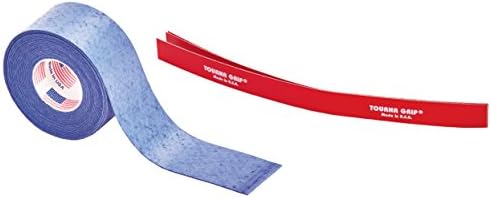
Tourna Grip Original 3-pack
Fresh overgrip between string jobs.
View on Amazon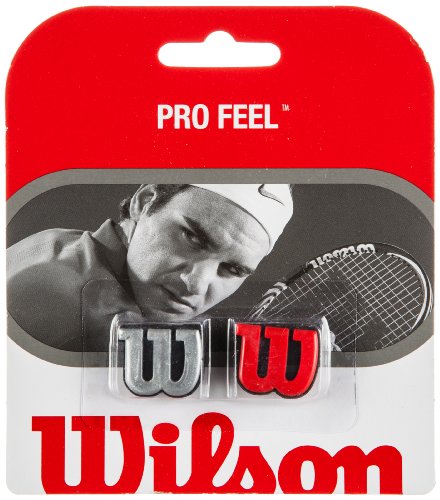
Wilson Pro Feel Dampeners 2-pack
Optional feel tweak — not a tension fix.
View on AmazonOvergrips and dampeners help comfort feel. They do not replace a friendlier string job.
Amazon tag bigncsports-20. Prices and listings can change.